
Didgeridoo Lessons with Didge Project

Handpan vs. RAV Drum 2019: Identical Scale Comparison

0

What are the similarities and differences between handpans and RAV drums? They are both made of steel and they both sound amazing, but one has a longer sustain than the other, and there is quite a different character to the sound. In this video we look at the Aura Handpan vs. RAV Drum (the newly updated 2019 model) in the same identical Celtic Minor scale. We actually used both the B Celtic Minor and D Celtic Minor versions of both Aura and RAV, so you will see 4 different pans in this video. This is a literal side by side comparison where we play each pan note for note and compare how they sound.

Hey guys this is AJ from Didge Project. I’m very excited to welcome back Matt Bazgier to the channel. He is going to show us the similarities and differences between the RAV Vast and the Aura Handpans. For those of you who don’t know about Aura, they are designed in the same way as the original PanArt Hang (aka Hang Drum), made here in the USA by Jon Antzoulis. Without further ado, here’s Matt Bazgier:

Hello everybody. My name is Matt Bazgier and I’m excited today because we’ve got Aura Handpans and RAV Drums in the same identical scales and we are going to do a a side-by-side comparison. Now there’s quite a difference in price between the two, they’re slightly different in material and look but they both have amazing sounds. We have both of these instruments in the B Celtic Minor and D Celtic Minor scales, so we will literally be hearing them side by side. Make sure to watch the video to hear the difference. Ready to see the similarities and differences, Handpan vs. RAV Drum?

Aura Handpan (Raw Steel) made in the USA by Jon Antzoulis

The first thing we see is that the instruments look a little bit different. They both have the same 9 note sequence with the same root note in the middle. They’re both very well built instruments, polished and shiny. The RAV Drum, starting in 2019, is now made with a golden ring around the edge, which I think looks great.

When it comes to the sound there are slight differences between these two instruments. The Aura Handpan, and most handpans, have a sharper attack (meaning a stronger beginning of the sound) and shorter sustain than the RAV Drum. The RAV definitely has a much longer sustain (meaning the sound lasts longer), and the sound is deeper and I would say more meditative. The sound of the handpan is very rich and full especially when you hit the note you can hear the attack very crisp and clear, i.e., you can hear the sound of your finger touching the drum and it gives you a high pitch slap sound. Compared to the RAV Drum, the sustain on the handpan is not as long.

What is great about the Aura Handpan is that the sound is really really unique and you can hear a very rich amount of details (harmonics) within each of the notes. There’s really no other instrument that sounds like this. One of the great things about the Aura Handpan is that instrument seems to be very compact and light and the sound projects out from the instrument in a very balanced way.

What I really love about the Celtic minor scale is that it doesn’t have a vibe of a typical minor scale. It’s reflective and meditative and kind of happy and uplifting in the same time.
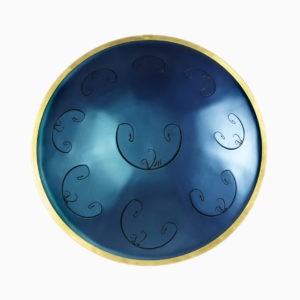
RAV Drum 2019 edition, made in Russia by RAV Labs
Starting in 2019, RAV Drums are now made with a Golden Ring. Made in Russia by RAV Labs.

Let’s talk about the harmonics and sustain of the Handpan vs. RAV Drum. Again, in the handpan, the harmonics are very very rich within one note and you can really dive deep into the sound and start to discover the richness of multiple layers of sound. Once you combine one note with the other notes it’s just a completely amazing experience. Although the sustain of the handpan is not as long as the RAV Drum, the first moment of the projection of the sound is very full and round for me. The sound of the Aura Handpan immediately put my mind into the right place.

Now let’s check out the D Celtic Minor RAV Drum, aka RAV Vast. As I mentioned before, the 2019 and later RAV Drums now have this golden ring around the edge. The older models generally have a rubber cover around them. I think the new golden ring looks great. Also the 2019 and later models seems to be a bit more polished than the older models.
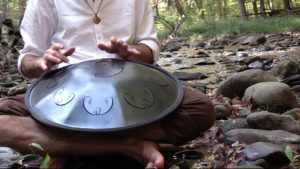
Handpan vs. RAV Drum
Matt Bazgier playing RAV Drum

The RAV Drum is the perfect instrument for all kinds of meditations and its sound immediately calms me down. I use it a lot in all kinds of sound meditations and sound baths and it brings a quality of peace and serenity. Make sure to listen to me playing in the video here so you really get a feel for what I am talking about. One of the greatest parts about the RAV Drum is the sustain of the notes. The sound lasts a long time so you can actually play slow melodies and really go deep into the sound and study the richness of it because each note has around at least 20 30 seconds of sustain. It’s a percussive instrument but sometimes it sounds a little bit like a bell or chime. The attack is maybe not so sharp as in case of the Handpan but the way the notes sound together is definitely a different experience.

Since we have both the RAV Vast and the Aura Handpan in the same identical scales (both B Celtic and D Celtic Minor), I’m going to do a note by note comparison. The D Celtic drum is higher than the B Celtic, so if you want a lower sound, I would go with the B Celtic. D Celtic is very popular for playing with other musicians because D Minor is a very common key on many instruments. B Minor is less common for guitar, piano, etc.
handpan vs. RAV Drum
Matt Bazgier playing Handpan

So what is the ding note? The ding is the note in the name of the scale (in this case, B or D), which is the lowest note on the drum (aka the “root”), almost always found in the center of the drum.

Overall, you can’t go wrong with either the RAV Drum or the Aura Handpan. Check out the Didge Project store to find the latest prices and availability. We generally have both in stock and we ship within 48 hours from our store in New York City. If you are in NYC, you can also come in and try them out for yourself.

Thanks again for joining us for the Handpan vs. RAV Drum comparison. Here are some great links to check out:

Handpan/RAV Drum articles and tutorials

Buy a Handpan or RAV Drum or come try one out in NYC

Subscribe to our YouTube Channel for the latest videos

If you haven’t already seen the first comparison we did between RAV Drums and Handpans, check it out here:

The Handpan or “hang” is a convex steel drum played with the hands and tuned with multiple notes. Each handpan is tuned to a particular scale such as major, natural minor, harmonic minor, hijaz, mixolydian, etc. Sonically the handpan is an overtone-emitting instrument that has the capacity to create many layers of sound and ethereal effects and works very well with drone instruments. Originally called the hang (pronounced “hah-ng”) the handpan was invented in 2001 by a little company in Switzerland. The instrument has fantastic resonance, overtones, and subtle variations in sounds beyond the tonal field base keys and can be played upside like an African Udu. Handpans are rare instruments with very few makers and even fewer makers that make quality instruments so it is a very expensive instrument and difficult to obtain one.

The handpans used in this video are Aura Handpans in the keys of B Celtic Minor and D Celtic Minor.

Order Aura Handpan: https://www.didgeproject.com/product/aura-handpan-various-scales-raw-steel/


RAV Drum (aka RAV Vast) is a revolutionary new instrument that fuses the concepts behind handpans (hang drums) and tongue drums (traditionally made of wood). Perfectly cut steel tongues vibrate harmoniously together to create an ethereal sound perfect for meditation, relaxation, and other mystical music experiences. RAV was invented in 2013 in Russia. Conceptually the RAV uses cut keys as opposed to the hammer tuned Hang drum, which is not cut or welded in anyway. The RAV has a deep resonance and profound reverb effects where the sound lasts for a long time while the Hang drum sound goes for a much shorter duration. This allows for a lot more space between key strokes in the RAV because the sound carries so long without losing the rhythm, which can make for more experimental playing in some respects than the Hang or handpan. The fullness of the sound and the duration of each key stroke makes the instrument very meditative to play because it renders itself to slow playing but of course can also be played very quickly and rhythmically. The backside of the RAV is not as accessible or resonant as a handpan but can still be played rhythmically. The price of a RAV is 1/3 the cost of a Hang and is also generally easier to play than the Hang for most people. It is also a much more durable and sturdy instrument. The handpan can be knocked out of tune with too hard of a hit and over time may need to get tuned up regardless while the Rav does not and is almost impossible to knock out of tune.

The RAV Drums used in this video are in the keys of B Celtic Minor and D Celtic Minor.

Order RAV Drum: https://www.didgeproject.com/product/rav-drum-aka-rav-vast-metal-tongue-drum-various-scales/


Heart and Mind Festival presents: The Sacred Woman, June 14-15, NYC

0
THE SACRED WOMAN - HEART & MIND FESTIVAL

The Heart and Mind Festival is honored to present The Sacred Woman, a special event to celebrate the Summer Solstice and the beauty and wisdom of the Divine Feminine. Join us as we explore the sacred woman through different global traditions with elders, teachers, indigenous wisdom keepers, artists, philosophers, and freethinkers from around the globe.

In a time and place where humanity is at a crossroads, we gather to honor and celebrate the sacred woman and the soul of the earth in its spirit of regeneration, abundance, diversity, inclusivity, healing, wisdom, and receptivity. The Heart & Mind Festival’s upcoming event, The Sacred Woman, will bring together spiritual leaders from around the world. This event will be an interactive experience that will include rituals, concerts, meditations, lectures, and panel discussions as they relate to the role of the divine feminine in sacred indigenous traditions.


***SUPPORT THIS EVENT ON INDIEGOGO*** https://igg.me/at/thesacredwoman

***FULL EVENT INFO*** https://www.heartandmindfestival.org/the-sacred-woman

***FACEBOOK EVENT PAGE*** https://www.facebook.com/events/591878574648720/

TIME AND LOCATION

THE CHURCH OF ST. PAUL & ST. ANDREW

263 W 86TH ST, NEW YORK, NY 10024

FRIDAY JUNE 14TH, 2019  5PM-10PM

SATURDAY JUNE 15TH, 2019  11 AM-10PM

The main entrance to the festival is located on the south side of West End Avenue between 86th & 87th street. There is a wheelchair accessible entrance on 86th street between West End Avenue & Broadway.


ADMISSION BY DONATION

Through an interactive experience that will include sacred rituals, concerts, meditations, lectures, and panel discussions, attendees will learn about the presenters’ visions, wisdom, and ways of life. Join us in celebrating the Sacred Woman.

This event is by donation; no one will be turned away for lack of funds. Secure your place by donating to The Sacred Woman on indiegogo

Donate to Heart & Mind


PRESENTERS

CHEIF ARVOL LOOKING HORSE
Arvol Looking Horse was born on the Cheyenne River Reservation in South Dakota. At the age of 12, he was given the responsibility of becoming the 19th Generation Keeper of the Sacred White Buffalo Calf Pipe, the youngest ever. He is widely recognized as a chief and the spiritual leader of all three branches of the Sioux tribe.

He is the author of White Buffalo Teachings and a guest columnist for Indian Country Today. A tireless advocate of maintaining traditional spiritual practices, Chief Looking Horse is the founder of Big Foot Riders which memorializes the massacre of Big Foot’s band at Wounded Knee.

Cheif Looking Horse’s prayers have opened numerous sessions of the United Nations and his many awards include the Juliet Hollister Award from the Temple of Understanding, a Non-Governmental Organization with Consultation Status with the United Nations Economic and Social Council. He lives on the Cheyenne River Reservation in South Dakota.

Film interviews with Arol Looking Horse on spirituality, tribal history, and advice for American Indian youth are a featured part of the documentary film and DVD on the Crow Shoshone Sun Dance entitled Native Spirit: The Sun Dance Way. An illustrated book, Native Spirit: The Sun Dance Way, by Thomas Yellowtail (recorded and edited by Michael Fitzgerald), also features his counsel.

World Wisdom has prepared special video clips of Arvol Looking Horse speaking on a variety of different subjects. They can be viewed in the Heart & Mind Festival’s American Indian Resources page.


image1+%281%29.jpg

PAULA LOOKING HORSE

Paula Looking Horse in an accomplished traditional Dakota singer and artist. Her musical credits include opening for the Indigo Girls, touring Europe with Keith Secola and other notible native artists, and composing and producing her own cd, Songs of a Black Hills Woman. She has be involved in indian rights for over 20 years, organizing the Run to Pipestone and Thanksgiving Feast and is one of the original graduates of Red Schoolhouse in Minnesota and a subsequentboard member. She brought her organizational skills to World Peace and Prayer Day in 1996 and has been a moving force in creating the events ever since. She is also the mother of eight children.


MAESTRO DOMINGO DIAS PORTA & MARIA GUADALUPE ABUNDIS DE DIAS (LUPITA)

Venerable Sat. Arhat Domingo Dias Porta was born in Caracas, Venezuela in 1930. Under his guidance, the Initiatic Sovereign Solar Order of Chichaan Itzaab (S.O.S.X.I.) has developed in different places in Venezuela, Mexico, the United States, Europe and Peru. He has founded and organized cultural and spiritual activities in almost all countries in the Americas, in 10 European countries, in Israel and in Morocco. He is the founder of the Association of the Solar American Indian (M.A.I.S.) Movement of Cultural Approach to the Autonomous Traditions and Peoples of the Continent. He is also the founder of “Acción por la Unidad Mundial” (A.U.M. – Action for Global Unity), a movement of International Cultural Integration to promote a culture of peace through dialogue of personal transformation, through exchange of knowledge, and joint participation in activities and programs (both on the individual and group level).

Maria Guadalupe Abundis de Dias (Lupita) has dedicated her life to the Sacred Initiatic Tradition for her own spiritual and human evolution and for the benefit of those who surround her. She graduated with a Masters Degree in primary education in 1982, and she entered the Initiatic path and became a student in the lineage of Dr. Serge Raynaud De La Ferriere In 1998. She currently works with many women’s groups and has helped organize many women’s gatherings at both the national and international levels, having lived in the United States, Mexico, and Venezuela. Lupita is a member of Insignias Aztecas, a nonprofit organization promoting and preserving the tradition and teachings of the Aztec dance. She has participated at the Shoshone-Kumiai Ghost Dance in Escondido, California and has participated in the “Magos de La Tierra” seminar with Jose Arguelles in Chile and Portland, Oregon. Lupita is currently a member of S.O.S.C.H.I. (Sovereign Solar Order of Chichen Itza), an organization promoting peace and the spiritual development of individuals for the benefit of all humanity, and L.H.A.S.S.A. (the Academy of Ancestral Wisdom).

She is the director of the Superior Course in Theurgy, an online course taught by Maestro Domingo Días Porta, and is an essential member of the organizations M.A.I.S.C. (The Movement of American Indian Solar Culture) and Accion por la Unidad Mundial (A.U.M.) / Action for Global Unity as a personal support to Maestro Domingo Dias Porta. Additionally, she is currently studying to receive a license in Gurukul Ayurveda under the direction of Dr. Ramon Gonzalez at UPTM University in Mérida, Venezuela. Lupita is happily married to Maestro Domingo Dias Porta, is the mother of 4 children, and grandmother of 2.


MAESTRO MANUEL RUFINO

Maestro Manuel Rufino is a recognized elder in the Taino tradition and World Director of M.A.I.S.C. He is a spiritual guide, gifted ceremonial leader and teacher of sacred initiatic traditions of the world. Maestro Manuel is also an artist, certified iridologist, naturo-therapist, vegetarian chef & the visionary guiding the Golden Drum community and many vegetarian restaurants including Jungle Café in Brooklyn. Guided by his teacher, Maestro Domingo Dias Porta, Maestro Manuel has been following the trails of indigenous healing arts for over 40 years. Maestro Manuel travels around the world sharing initiatic traditions, leading workshops, lectures, sweat lodges and healing rituals.
In 2010 Maestro Manuel and a number of his students opened Golden Drum as a space for sacred traditions in New York City. Founded to give voice to the worldview of Native Americans, indigenous peoples and the esoteric schools, Golden Drum features living representatives and students of these great traditions.


JOANNE SHENANDOAH

Joanne Shenandoah, Ph.D., is one of “America’s most celebrated and critically acclaimed Native American musicians of her time”, Associated Press. She is a Grammy Award winner with 3 Nominations), over 40 music awards (including 14 Native American Music awards – Hall of Fame Inductee) with music ranging from solo to full symphony and 23 recordings. She is a humanitarian, working as a peace advocate, earth justice and has captured the hearts of audiences all over the world, from North and South America, South Africa, Europe, Australia and Asia. She has received multiple awards and praise for her work to promote universal peace and understanding. She is a direct descendent of the famed “Chief Shenandoah” who is noted to have been given a “Peace Medal” by George Washington and established Hamilton College, Clinton, NY (The Oneida Academy).

56196798_2216849148532160_5859002752352387072_n.JPG

TATA PEDRO CRUZ

Tata Pedro Cruz is one of the few surviving members of the Mayan Council of the Elders of Tz’utujil, which is a branch of the Maya Qui-che. “Tata Pedro,” as he is most affectionately known, is a traditional Mayan Ajq’ij and Day Keeper, and one of the principal authorities of the Council of Mayan Elders of Lake Atitlan in Guatamala. He received the title “Heart of the Lake Atitlan” K’U’XYA by his fellow Mayan Council of Elders and Tz’utujil people. Tata Pedro recognizes the interconnectedness of all people, the expanding consciousness of the planet, and the urgent need to unify our spiritual, cultural, and ethnic wisdom for the benefit of the planet and humanity. Tata Pedro is a globally recognized elder in the Mayan tradition and has traveled far and wide sharing knowledge, ceremonies, and practices. He is the interpreter of dreams for his community and a leader of the preservation and education of Mayan day keeping and fire ceremonies.


aag headshot 2.jpg

ALEX AND ALLYSON GREY

The mystic paintings of Alex Grey articulate realms of psychedelic visionary consciousness, revealing interwoven energies of body and soul, love and spirit, illuminating the anatomical core of each being. Alex’s visual meditations on the nature of life and consciousness, the subject of his art, have reached millions through his five books including three monographs, the exhibition and extensive reproduction of his artwork, speaking appearances including a popular TED talk, stage sets for major rock bands, video animation, and Grammy award winning album art. (( alexgrey.com ))

Allyson Grey is a painter and social sculptor. She has been Alex’s creative collaborator, life partner and studio mate since 1975 after meeting in art school. Allyson’s paintings represent chaos, order and secret writing, an essentialized world view symbolizing the material world, the interconnected realm of energy and light and the sacred language of creative expression. With an MFA from Tufts University, Allyson has long been an art educator, art events organizer and a muse to artists worldwide. (( allysongrey.com ))

Together the Grey’s co-founded the Chapel of Sacred Mirrors, (CoSM; cosm.org), a spiritual creative retreat center outside of New York City. On the forefront of a movement in which painters join musicians on stage, the Grey’s have painted together live before tens of thousands of dancing young people at New York Broadway theaters, at sold-out festivals and arenas in dozens of international cities across five continents. As long-time advocates of “cognitive liberty,” a growing international “sacramental culture” has embraced the Grey’s as important mapmakers and spokespersons for the visionary realm. The Grey’s, with their team, are currently building Entheon, a Visionary Art sanctuary in the Hudson Valley of New York.


NANA MARINA CRUZ

Nana Marina Cruz is a healer from the Tz ́utujil Tribe, and is a spiritual guide of the old traditions. She is the daughter of Tata Pedro & works not just as a healer and therapist with natural folk methods, but as a ceremonial leader of fire, tobacco, cacao and sweat lodge, and also teaches native Mayan languages.


IMG_3032.jpg

MELAINE STONEMAN & MARYANN BEARHEELS

Melaine Stoneman (Wakinyan Ska Wi—White Lightning Women) and MaryAnn Bearheels (Ta Oyate Waste Wi—Her Good Nation Women) are Sicangu Lakotas from Rosebud, South Dakota. They will share a discussion on Native American Community Genetics: Learning Our Oral Traditions, Creation Stories, Spiritual Food & Bear Dance.

“Our Lakota way of life starts with our creation stories and oral traditions that have been handed down over 500 years. We are creating awareness about our Indigenous environmental issues through our teachings of the water, buffalo, and bear teachings. Re-vitalizing our spiritual and physical being as Lakota women is vitally important to our future generations. Lakota community genetics is an overall look at how we are able to re-birth our nation utilizing our sovereignty and inherent rights to protect our ceremonies and women. We are the backbone to our nation and the umbilical cord to our earth.”


IMG_2938.JPG

GRANDMOTHER CLARA SOARING HAWK

Grandmother Clara Soaring Hawk is the Deer Clan Chief of the Ramapough-Lenape, a Water Protector who is working tirelessly to stop the Pilgrim pipeline from being built in New Jersey and New York through Ramapough land and sacred sites. Her granddaughter, Tia, also appears in the video.


IMG_2882.JPG

PUALANI CASE

Pualani Case, born and raised on the Island of Hawa

i’i surrounded by the high mountains of Mauna Kea, Mauna Loa, Hualalai and Kohala, the fresh waters of Kohakohau and Waikoloa and the plains of Waimea. Pua’s life path and purpose has led her to become a Kumu Hula, a teacher of traditional dance and chant, and a teacher of the ways, culture and traditions of the kanaka maoli or native peoples of Hawai’i. With a degree in Hawaiian Language and culture, and a teaching degree in Social Studies, interwoven with the traditional teachings, philosophies and expectations from her kupuna or elders, Pua has integrated ‘Ike Hawai’i or Hawaiian knowledge and lessons into the public school system for over 30 years.

Pua and her ‘ohana, her family are active as spiritual and cultural leaders in and beyond their community. They are an integral part of the protocol and ceremonies for Nā Kalaiwa’a, Moku o Keawe Makali’i Voyaging Canoe, as well as for Hōkūle’a and other Pacific Island Voyages. Pua sits on various educational and cultural boards including the Waimea Hawaiian Civic Club, Waimea Community Education Hui, and MKEA, Mauna Kea Education and Awareness. Pua and her family are petitioners in the Contested Case hearing filed on behalf of Mauna Kea Mountain. As a representative of the Mauna Kea ‘Ohana Nā Kia’I Mauna, Idle No More Hawai’i Warriors Rising and Idle No More Mauna, Kea she and her family have traveled throughout the continent, to Europe and various places across the Pacific to network, support and address the issues and challenges facing sacred places and life ways of the people of HawaiʻI and beyond Hawaii. In the past two years, Pua has represented the Mauna Kea Movement in Aotearoa and in California, she is in support of the Winnemem Wintuʻs efforts to bring back the salmon to the McCloud River. She has stood on the frontlines in North Dakota at Standing Rock and Sacred Stone Camps with fellow Mauna Kea Protectors. In October, Pua has been featured at Indigenous Peoples Day Celebrations in New York City for five years. This work is a one of commitment, dedication, passion and a mission to weave the relationships and strengthen the alliances with peoples everywhere for the highest good for the earth.


IMG_2945.JPG

KUMA HULA ALI’I KAHUNA NUI EHULANI

My name is Ehulani Stephany, I am Kumu Hula (teacher of hula), Ali’i Kahuna Nui(high priestess). The name of my Halau(school) is; Halau Hula Ka Makani Hali ‘Ala O Puna, which means; “The Returning Fragrant Wind of Puna” I have been teaching hula since 1991, and was blessed to studied under 14 different kumu hula, and numerous Hawaiian practioners, and na kahuna nui(high priest’s). I developed my own style of hula by combining the styles, mana’o(thoughts), information, traditions, and protocol of all my na kumu(teachers). Sharing the rich and deep learning of the Hawaiian culture, along with the feeling of the true ALOHA SPIRIT.

Bear+Fox.jpg

THERESA BEAR FOX

Shekon Sewakwekon, (Greetings everyone), My name is Theresa “Bear” Fox, my Mohawk name is Kenkiohkoktha, and I am of the Wolf Clan. My Mohawk name means I am at the back of a crowd of people or I am the end of a long line of people. I have five children and I am married to Sky Fox.   My oldest is a girl and I have four boys.

I was born into a big family. There are eight boys, six girls and I am the youngest. My Mother and Father were hard working. They made sure we were always provided for. They always made sure we had a table full of food and clean clothes to wear. We didn’t have a lot of money, but I didn’t feel that we had to go without anything. I always felt like we were rich, because I was so happy and I always felt loved. We always looked out for one another, and at times my sisters were like my Mothers too. I try and raise my children with the same family values. I taught them to take care of each other. I taught them to respect their elders and to take pride in who they are.  I encourage them to learn our language and culture so they can teach their young ones someday. My goal is to raise good mothers and fathers.

I  live in Akwesasne, and I love our community. I especially love how our people care for one another. If someone is going through hard times, the community comes together for a fundraiser and a lot of support. I always try to do my best to help out when I can. I am part of a woman’s singing group called “Kontiwennenhawi” which means Carriers of the Words. We get together once a week and we talk, laugh and learn songs. Our duties as a Singing Society are to help out in our community. We are often asked to sing for visitors or for the children in our community. We help out at fundraisers and donate money to people who are in need. We have a community fund account and we raise money by selling our CD’s or by singing outside of our community. Niawen kowa, (Big thanks)


unnamed-7.jpg

LEOPARDO YAWA BANE

Leopardo Yawa Bane is the son of a traditional chief from the Huni Kuin and advocate for the ecological heritage of his people’s native lands both domestically and internationally. Born on the Jordan River Kaxinawá Reserve, in the state of Acre, Brazil, Bane and his brother Fabiano were sent from their villages to sao paulo and rio de janeiro, in Brazil at a young age by their father to learn new knowledge of the world from the outside of the forest and represent their people in tradition, heritage and politics. Since then he completed his University studies, learned to speak portuguese fluently. And has been a representant from Huni Kuin people all over the globe.


unnamed-1.jpg

JOSE DE LIMA KAXINAWA

José de Lima Kaxinawá from the Hunikuin people of Acre, Brazil. He is an Indigenous Agroflorestal Agent and Indigenous filmmaker. José has participated in indigenous film festivals in the United States, Germany, Mexico and Bolivia and his films have won the the following awards: ForumDoc Documentary Festival of Belo Horizonte -Brazil (2006); Tatu de Oro -Bahia Film Festival (2008); Tatu Plata -Bahia Film Festival (2009). He was Secretary of AMAAIAC (Association Movement of Indigenous Agroforestry Agentsof Acre) from 2002 to 2008 and Advisor for Indigenous Affairs with the Government of the State of Acre from 2011 until 2019.


TITO LA ROSA

Tito La Rosa is a descendant of Quechua Indians of the Peruvian Andes. For many years, he has been recovering and preserving, studying, and intuiting the ancestral music of Peru. He is also a Curandero de Sonido, a sound healer, who enters into an altered state to bring forth sound that elevates, allowing for healing and balance to occur. Ancient Andean wisdom teaches us that the earth was made while the creator sang, thus all beings are made of sound, rhythm, and harmony. Through his concerts, flower ceremonies, and music classes La Rosa helps reawaken our memories (memoria antigua), weaving sounds into frequencies that open the heart and encourage the spirit to soar. La Rosa has recorded with Mary Youngblood on the Silver Wave record label. His 2002 CD, “The Prophecy of the Eagle and the Condor,” was nominated for a Native American Music Award, for Best World Music Recording.


RABBI YOM TOV GLASER

Rabbi Yom Tov Glaser received a Bachelors Degree in Humanities from the University of California at Santa Barbara. For 12 years he surfed internationally on a professional level. He is also an accomplished mountain biker and professional musician. He received rabbinic ordination from Aish HaTorah and the Chief Rabbi of Jerusalem. His areas of expertise are Kabbala, Spirituality and Psychotherapy.


KEVIN NATHANIEL

A visionary musician who, with voice and ancient Afrikan instruments, channels sound as a universal healing force. Together, breathing rhythms to the beat of our synchronized hearts, Kevin Nathaniel resonates songs of the “big picture” of love in ways that propel the soul to dance! A long-time devotee of mbira, kalimba, circle song, drum, dance, meditation, and yoga; a world-traveled music healer sharing the musical medicine of the ancient, the now, and the beyond, Kevin Nathaniel brings a fresh, deep experience of the beauty of sound.

EVENT LINKS

***SUPPORT THIS EVENT ON INDIEGOGO*** https://igg.me/at/thesacredwoman

***FULL EVENT INFO*** https://www.heartandmindfestival.org/the-sacred-woman

***FACEBOOK EVENT PAGE*** https://www.facebook.com/events/591878574648720/

***VOLUNEER WITH HEART & MIND FESTIVAL*** https://www.heartandmindfestival.org/how-to-get-involved


Didgeridoo Sleep Apnea Therapy Patient Log

1
didgeridoo sleep apnea therapy lessons

Playing didgeridoo to treat sleep apnea, snoring, upper airway resistance syndrome (U.A.R.S.) and other related conditions is a practice that has now been recommended by doctors and alternative medicine practitioners for 13 years, since the first study on the method was published in the British Medical Journal in 2006. At the time of writing this article (April 2019), new success stories, are emerging to support the hypothesis that playing didgeridoo helps alleviate the symptoms of sleep apnea.

Paul Hildings successfully treated sleep apnea by playing didgeridoo. After 8 months, his sleep doctor declared, "no further treatment necessary."
Paul H. successfully treated sleep apnea by playing didgeridoo. After 8 months, his sleep doctor declared, “no further treatment necessary.”

One such testimony is the story of Paul H. of Boise, Idaho, a person who was diagnosed with sleep apnea and, determined to get better, decided to play the didgeridoo. After 8 months of playing didgeridoo continuously, Paul had a follow up sleep study and was told that his apnea level was “trivial” and needed no further medical treatment.

View all of our articles on didgeridoo playing for sleep apnea.

After we heard Paul’s story, we knew that it was valuable for the world to hear. Here’s what Paul told us:

“On April 3, [2019] I had a sleep study done at the Mayo Clinic [in Rochester, MN] for my complex sleep apnea. Apnea is a problem for me because it is a likely trigger for my atrial fibrillation.

“My previous study was in February of 2018 in Boise (where I live) at St. Luke’s Boise Medical Center at which time I was told my apnea was mild to moderate, with an overall AHI [apnea-hypopnea index] of 13.4.”

What is the apnea-hypopnea index (AHI)?

The apnea-hypopnea index (AHI) is the measurement of pauses in breathing per hour during sleep. This value is the primary metric in determining the severity of sleep apnea in patients. Here’s how the measurements are classified:

Normal: AHI<5

Mild sleep apnea: 5≤AHI<15

Moderate sleep apnea: 15≤AHI<30

Severe sleep apnea: AHI≥30

Every sleep apnea patient is unique

Paul continued, “Because my apnea is complex, I was not a candidate for a CPAP.  I did try using a “dental appliance” which did not seem to have much effect.

“I started playing the didge last August after my sleep doctor (Dr. Oleg Kouskov) in Boise mentioned the British Medical Journal report about the didge sleep study.  I began playing regularly in December [2018], finally figured out circular breathing and began having a lot of fun with the didge! I ordered ‘Didge for Sleep‘ in March [2019] and did many of the exercises on a regular basis for the three weeks preceding the Mayo study.

See how and why the didgeridoo sleep apnea method works:

Paul continued, “I scheduled the April 3 study at the Mayo to get a second opinion, since conventional treatment was not going to work for me. However, at the conclusion of the Mayo study, the doctor (Dr. Peter C. Gay) told me no further treatment is necessary because my apnea was much better, with an overall AHI of 3.9 and a 2.0 AHI when I used my dental appliance. The doctor’s clinical interpretation is that I now have ‘trivial sleep disordered breathing’ even during REM stage sleep. So, looks like the didge worked for me!  And, it’s a blast to play, much more fun than a CPAP!

Paul’s Sleep Apnea Patient History:

Here’s a record of Paul H.’s patient chronology, from first diagnosis of sleep apnea to the final diagnosis as “no further treatment necessary”:

02/01/16   Diagnosed with atrial fibrillation.  Apnea is mentioned as possible trigger

03/14/16   First sleep study, in Boise. Diagnosis:  Mild to moderate complex apnea, CPAP recommended but made my central apnea worse

02/18/18   Most recent study before didge, in Boise. Diagnosis:  Mild to moderate apnea, ASV (a CPAP alternative) recommended, but I decide to try didge

08/01/18   Approx. date started playing didge, maybe two or three days a week

12/01/18   Approx. date started regular playing, figured out circular breathing.  Six to seven days a week for 30 minutes.

03/09/19   Ordered “Didge for Sleep” and started practicing recommended exercises every day, 30 minutes to an hour or more.

04/03/19   Mayo Clinic sleep study.  Result:  “Trivial” apnea, doctor says no further treatment necessary.

Paul H. is just one of a number of people who have confirmed, through their own experience, that playing didgeridoo is a valid therapy for sleep apnea. For more stories of sleep apnea, watch the following video, which shows the stories of 3 more people who had success with playing the didgeridoo for sleep apnea:

Sending a special thank you to Paul H. for sharing his success story with us and allowing us to publish it here at Didge Project.

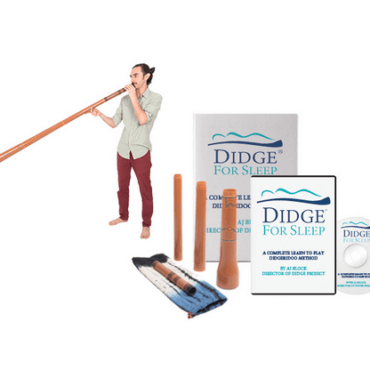
Didge For Sleep” is a step-by-step instructional DVD and Handbook and travel didgeridoo package that provides everything sleep apnea patients need to learn to play the instrument at their own pace.


POWER of the Sacred Human: Presented w/ the Rubin Museum of Art, NYC, Sat., March 23, 11am-5pm

0
heart and mind festival power of the sacred human

The Heart and Mind Festival Annex is honored to present The Power of the Sacred Human, a special event to celebrate the Spring Equinox, in partnership with the Rubin Museum or Art. This event is dedicated to the concept of the Sacred Human as presented through different global traditions. Elders, teachers, indigenous wisdom keepers, artists, philosophers, and freethinkers from the Taino, Quechua, Rosebud Sioux Tribe of the Sicangu Nation, and Tibetan traditions will take part, including Maestro Domingo Dias Porta, Maria Guadalupe Abundis De Dias (Lupita), Maestro Manual Ruffino, Tata Pedro Cruz, Tito La Rosa, Melaine Stoneman and MaryAnn Bearheels, and Ven. Khenpo Tsewang Dongyal Rinpoche.

Through an interactive experience that will include sacred rituals, concerts, meditations, lectures, and panel discussions, attendees will learn about the presenters’ visions, wisdom, and ways of life. Join us in celebrating the Power of the Sacred Human.

Co-presented with Golden Drum, The Sacred Arts Research Foundation, Movement of the American Indian Solar Culture (MAISC), Acción por la Unidad Mundial, and the Universal Initiatic College.

Tickets available for purchase here.

About the Speakers

unnamed (1).jpg

MAESTRO DOMINGO DIAS PORTA was born in Caracas, Venezuela in 1930. Under his guidance, the Initiatic Sovereign Solar Order of Chichaan Itzaab (S.O.S.X.I.) has developed in different places in Venezuela, Mexico, the United States, Europe and Peru. He has founded and organized cultural and spiritual activities in almost all countries in the Americas, in 10 European countries, in Israel and in Morocco.

He is the founder of the Association of the Solar American Indian (M.A.I.S.) Movement of Cultural Approach to the Autonomous Traditions and Peoples of the Continent. He is also the founder of “Acción por la Unidad Mundial” (A.U.M. – Action for Global Unity), a movement of International Cultural Integration to promote a culture of peace through dialogue of personal transformation, through exchange of knowledge, and joint participation in activities and programs (both on the individual and group level).

MARIA GUADALUPE ABUNDIS DE DIAS (LUPITA) has dedicated her life to the Sacred Initiatic Tradition for her own spiritual and human evolution and for the benefit of those who surround her. She graduated with a Masters Degree in primary education in 1982 and she entered the Initiatic path and became a student in the lineage of Dr. Serge Raynaud De La Ferriere In 1998. She currently works with many women’s groups and has helped organize many women’s gatherings at both the national and international levels, having lived in the United States, Mexico, and Venezuela. Lupita is a member of “Insignias Aztecas”, a non-profit organization promoting and preserving the tradition and teachings of the Aztec dance. She  has participated at the Shoshone-Kumiai Ghost Dance in Escondido, California and has participated in the “Magos de La Tierra” seminar with Jose Arguelles in Chile and Portland, Oregon. Lupita is currently a member of S.O.S.C.H.I. (Sovereign Solar Order of Chichen Itza), an organization promoting peace and the spiritual development of individuals for the benefit of all humanity and L.H.A.S.S.A. (the Academy of Ancestral Wisdom).

She is the director of the Superior Course in Theurgy, an on-line course taught by Maestro Domingo Días Porta and is an essential member of the organizations M.A.I.S. (Commonwealth of the Solar American Indian) and Accion por la Unidad Mundial (A.U.M.) / Action for Global Unity as a personal support to Maestro Domingo Dias Porta. Additionally, she is currently studying to receive a license in Gurukul Ayurveda under the direction of Dr. Ramon Gonzalez at UPTM University in Mérida, Venezuela. Lupita is happily married to Maestro Domingo Dias Porta, is the mother of 4 children, and grandmother of 2.

download (3).jpeg

MAESTRO MANUEL RUFINO is a recognized elder in the Taino tradition and World Director of M.A.I.S.C. (The Movement of American Indian Solar Culture). He is a spiritual guide, gifted ceremonial leader, and teacher of sacred initiatic traditions of the world. Maestro Manuel is also an artist, certified iridologist, naturo-therapist, vegetarian chef, and the visionary guiding the Golden Drum community and many vegetarian restaurants including Jungle Café in Brooklyn. Guided by his teacher, Maestro Domingo Dias Porta, Maestro Manuel has been following the trails of indigenous healing arts for over 40 years. Maestro Manuel travels around the world sharing initiatic traditions, leading workshops, lectures, sweat lodges, and healing rituals.

In 2010 Maestro Manuel and a number of his students opened Golden Drum as a space for sacred traditions in New York City. Founded to give voice to the worldview of Native Americans, indigenous peoples, and the esoteric schools, Golden Drum features living representatives and students of these great traditions.

Tata Pedro.jpeg

TATA PEDRO CRUZ is one of the few surviving members of the Mayan Council of the Elders of Tz’utujil, which is a branch of the Maya Qui-che. “Tata Pedro,” as he is most affectionately known, is a traditional Mayan Ajq’ij and Day Keeper, and one of the principal authorities of the Council of Mayan Elders of Lake Atitlan in Guatamala. He received the title “Heart of the Lake Atitlan” K’U’XYA by his fellow Mayan Council of Elders and Tz’utujil people. Tata Pedro recognizes the interconnectedness of all people, the expanding consciousness of the planet, and the urgent need to unify our spiritual, cultural, and ethnic wisdom for the benefit of the planet and humanity. Tata Pedro is a globally recognized elder in the Mayan tradition and has traveled far and wide sharing knowledge, ceremonies, and practices. He is the interpreter of dreams for his community and a leader of the preservation and education of Mayan day keeping and fire ceremonies.

Tito.jpeg

TITO LA ROSA is a descendant of Quechua Indians of the Peruvian Andes. For many years, he has been recovering and preserving, studying, and intuiting the ancestral music of Peru. He is also a Curandero de Sonido, a sound healer, who enters into an altered state to bring forth sound that elevates, allowing for healing and balance to occur.

Ancient Andean wisdom teaches us that the earth was made while the creator sang, thus all beings are made of sound, rhythm, and harmony. Through his concerts, flower ceremonies, and music classes La Rosa helps reawaken our memories (memoria antigua), weaving sounds into frequencies that open the heart and encourage the spirit to soar.

La Rosa has recorded with Mary Youngblood on the Silver Wave record label. His 2002 CD, “The Prophecy of the Eagle and the Condor,” was nominated for a Native American Music Award, for Best World Music Recording.

Melaine+Stoneman%3A+Wakinyan+Ska+Wi-+White+Lightening+women.jpg
MaryAnn+Beaheels.jpg

MELANIE STONEMAN (Wakinyan Ska Wi—White Lightning Women) and MARYANN BEARHEELS (Ta Oyate Waste Wi—Her Good Nation Women) are Sicangu Lakotas from Rosebud, South Dakota. They will share a discussion on Native American Community Genetics: Learning Our Oral Traditions, Creation Stories, Spiritual Food & Bear Dance.

“Our Lakota way of life starts with our creation stories and oral traditions that have been handed down over 500 years. We are creating awareness about our Indigenous environmental issues through our teachings of the water, buffalo, and bear teachings. Re-vitalizing our spiritual and physical being as Lakota women is vitally important to our future generations. Lakota community genetics is an overall look at how we are able to re-birth our nation utilizing our sovereignty and inherent rights to protect our ceremonies and women. We are the backbone to our nation and the umbilical cord to our earth.”

download (4).jpeg

VEN. KHENPO TSEWANG DONGYAL RINPOCHE was born in eastern Tibet and enthroned as a Nyingmapa abbot by His Holiness Dudjom Rinpoche. He traveled and studied with H.H. Dudjom Rinpoche, as well as with his late brother, Vajrayana master and scholar Ven. Khenchen Palden Sherab Rinpoche, and his father, the hidden yogi Lama Chimed Namgyal.

Ven. Khenchen Palden Sherab Rinpoche and Ven. Khenpo Tsewang Dongyal Rinpoche established the Padmasambhava Buddhist Center (PBC) in 1989 to preserve the authentic message of Buddha Shakyamuni and Guru Padmasambhava in its entirety, and in particular to teach the traditions of the Nyingma school and Vajrayana Buddhism. PBC includes over 20 centers in the USA, India, Puerto Rico, and Russia, as well as monastic institutions in India, the USA, and Russia.

As a holder of the complete Nyingmapa lineage, Khenpo Tsewang Rinpoche is fully versed in the Theravada, Mahayana, and Vajrayana schools, and is a master of Dzogchen. He has co-authored over 30 Dharma books in English with Khenchen Palden Sherab Rinpoche, and travels throughout the world giving teachings, empowerments, and personal guidance in fluent English at numerous retreats.

Burru, Afro-Jamaican Djembe Rhythm with Joakim Lartey @ Tribal Rhyhtm Gathering 2018

0

Burru is a super fun Pan-African rhythm with a number of variations that can be played. It is commonly used in Jamaica as a dance and ceremonial rhythm.

The simple way to write the Burru rhythm is:

B B  TT B B TTTT (where B is bass and T is tone).

See video for more info on how to play the Burru rhythm.

Joakim Lartey is a drummer/percussionist, storyteller, educator and sound designer. He was co-founder, lead singer and percussionist of Woodstock’s Futu Futu. He is engaged in a lifelong exploration of recording technology and the fusion of traditional/ancient and contemporary musical forms. He has collaborated/played with Natalie Merchant, Jack DeJohnette, John Hall, Baba Olatunji among others. He currently performs with the duo Joakim & Chris [with guitarist Chris Lane] and The Sonark Trio [with multi instrumentalist Thomas Workman and cellist Gabriel Dresdale]

What Is A Clave Rhythm? Joakim Lartey explains at Tribal Rhythm Gathering

A clave rhythm is a repeated rhythmic figure, usually played on a single or dual toned instrument such as sticks or bells, and usually has some level of syncopation, meaning it contains notes both on the strong beats and on the weak beats.

In this video, Joakim Lartey explains a few different clave rhythms from Latin and African music traditions. Make sure to clap along as Joakim plays them so you can learn them yourself.

Joakim Lartey is a drummer/percussionist, storyteller, educator and sound designer. He was co-founder, lead singer and percussionist of Woodstock’s Futu Futu. He is engaged in a lifelong exploration of recording technology and the fusion of traditional/ancient and contemporary musical forms. He has collaborated/played with Natalie Merchant, Jack DeJohnette, John Hall, Baba Olatunji among others… He currently performs with the duo Joakim & Chris [with guitarist Chris Lane] and The Sonark Trio [with multi instrumentalist Thomas Workman and cellist Gabriel Dresdale].

Holiday Gifts For Music Lovers: A Quick Guide

0
holiday gifts for music lovers

‘Tis the season for holiday shopping! By now you’ve probably made a list that details everyone that you need to shop for. If you have someone on your list that lives for all things music, you might be a little perplexed as to what you should buy. With a little research, you can find some special holiday gifts for music lovers in your life. Whether they like country music, classic rock or rap, there is something for everyone out there. Let’s take a closer look at some of your options.

1. Themed Notebook

People who love music, usually like to jot down their favorite song lyrics, write original songs, or bring a musical flavor to their ideas. If they love music, an appropriate themed notebook will be the perfect place to brainstorm some ideas. You can most likely find a notebook with a certain band’s logo on the front or a musical note theme as pictured here.

2. Bluetooth Speaker

Someone who likes music probably has their favorite songs on their smartphone. A great way to play that music at home is by way of a Bluetooth speaker. Not all speakers are created equally. Apple has their line of speakers that you can purchase. Bose is another brand that makes exceptional speakers. This is a great item to look for on Black Friday, or during the month of December when online sales are peaking. Our pick for this holiday season is the bundled JBL Flip 4 with case:

3. Guitar Stand

For someone who plays guitar and loves music, investing in a nice guitar holder is a great idea. There are companies online that create wood guitar holders. You can have them monogrammed with a special message. Many of them even hold guitar picks. Here’s our pick for the most economical yet sturdy and functional stand:


4. Vinyl Record in a Picture Frame

A true music lover understands the importance and quality of vinyl records. If you know your loved one’s favorite band, try to find a rare item that is part of that band’s collection, or get their favorite record. Place the record in one of these sharp frames to make it a decorative wall-hangable gift:


5. Music Themed Jewelry

The item that you choose for the music lover in your life doesn’t have to focus on sound, instruments or music itself. You can purchase a really beautiful piece of jewelry that highlights what they love the most. You can stick with something general like a music note or treble clef. You may even be able to find a charm with a specific band’s logo on it. Here’s a few of our favorite pieces:

6. Musical Instruments

Final Thoughts

When shopping for holiday gifts for music lovers, spend a little bit of time to research holiday gift giving guides and you will be sure to find some great ideas. Though it might seem like a difficult task, rest assured that there is a great deal somewhere, you just have to find it.

Author

Michelle Walter is firstly a mother of one beautiful daughter, and secondly a freelance writer. She loves to write articles that have an impact on other’s lives. When she gets free time, she tries to stay active and enjoy the outdoors. She can be reached at michelle.walter984@gmail.com.

Didgeridoo Beatbox Tutorial: 3 Essential Rhythms

0

In this didgeridoo beatbox tutorial video, Didge Project’s Jerry Walsh demonstrates how to play 3 basic beatboxing rhythms for the didgeridoo. What’s great about these rhythms is that they do not require circular breathing, so even if you haven’t mastered circular breathing yet, you can pick up the instrument right away and begin to play.

What is didgeridoo beatboxing?

Didgeridoo beatboxing is exactly what it sounds like: a combination of the arts of didgeridoo playing and beatboxing. To practice didgeridoo beatboxing, one must have skills in both beatboxing and didgeridoo playing as separate arts, and then combine them to create a unified didgeridoo beatbox sound. Many exponents of didgeridoo beatboxing draw influence from popular music genres such as hip-hop, rock, dubstep and R&B. As artists, didgeridoo beatboxers are great at synthesizing music across genres.

In this video, Jerry Walsh demonstrates many of the basic sounds used in the didgeridoo beatbox art form, and shows how to combine these sounds in time to create specific rhythms, or “beats.”

Want to see more didgeridoo beatbox tutorials here at Didge Project? Write what you would like to learn in the comments section below.

Order Airdidge at https://www.didgeproject.com/Airdidge

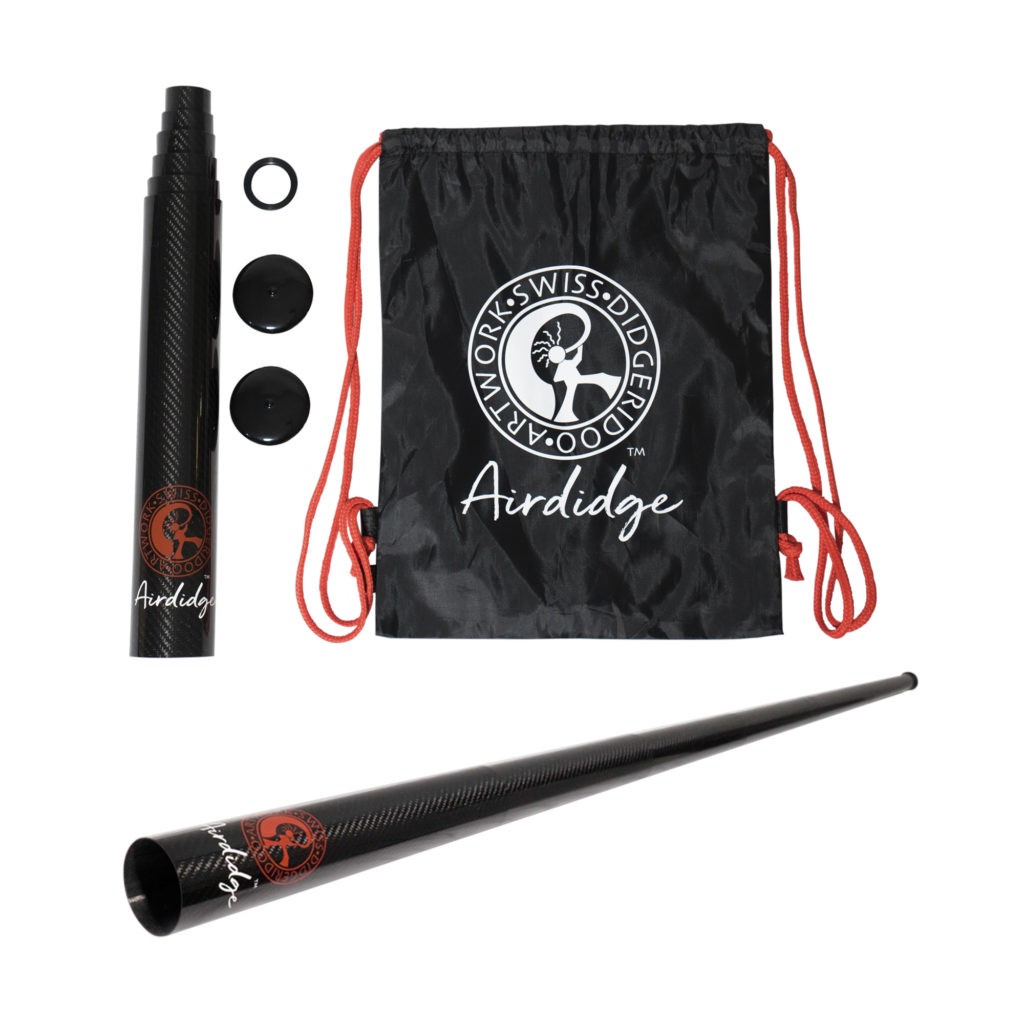
Airdidge is the #1 travel didgeridoo. As seen in this video, the Airdidge has a great sound. It is super light-weight and packs down into a 13 inch long by 3 inch diameter cylinder.

Free Download: Didgeridoo Fundamentals, 45-minute beginners course: https://www.didgeproject.com/didgeridoo-fundamentals/


Improve Your Rhythm With Vocal Exercises – Glen Velez @ Tribal Rhythms Gathering 2018

Improve your rhythm with these fun singing and clapping exercises!

Glen Velez is truly a master of the frame drum and he is also an excellent teacher of rhythms for musicians of all levels. I think everyone had a blast taking his workshop at Tribal Rhythms Gathering 2018 which covered vocal rhythm, which we will go through in this video, then went into stepping, clapping, playing rattles and frame drums, all while singing throughout.

If you learned something from this video, make sure to check out “Improve Your Musical Rhythm with Metronome Exercises”. This is one of our most popular videos and features some very simple clap-alongs that will help you take your music to a higher level: https://www.youtube.com/watch?v=WIzLXr7xecY

Question of the day: What is your #1 challenge with rhythm? Write your answer in the comments section below and I will do my best to respond to every sincere answer.

On behalf of Didge Project, I want give a huge thanks to Glen Velez and to you, our viewers. Make sure to hit that subscribe button and we will see you in the next one.

*******************

Didge Project features music tutorials and instrument reviews. Follow us:

https://www.facebook.com/didgeproject
https://www.youtube.com/didgeproject7

*******************

Camera by Kyle Martin and Karma Hallmark

This High Tech Travel Didge Packs Snug And Sounds Great

0

Bring the didgeridoo to places previously unimaginable with Airdidge!

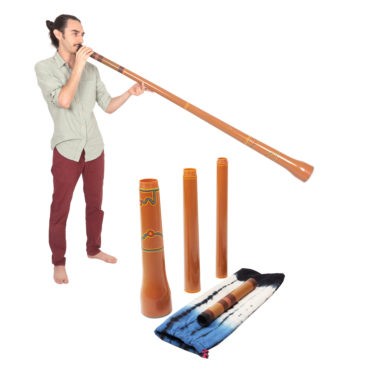
Airdidge is the first carbon fiber telescoping didgeridoo designed for musicians on the go. With a weight of 1.2 lbs and a packed length of 14.57 inches, this instrument is the ideal companion for traveling and hiking.

Purchase Airdidge

This travel didge fits in any backpack and plays in 3 keys: Bb (fully extended), C# (with smallest tube pushed in, and E (with end piece removed). Great for all levels of didgeridoo players, from beginners to advanced.

Need a portable travel didge? Order Airdidge here.

Learn to play didgeridoo and master the technique of CIRCULAR BREATHING

Most Popular Articles