
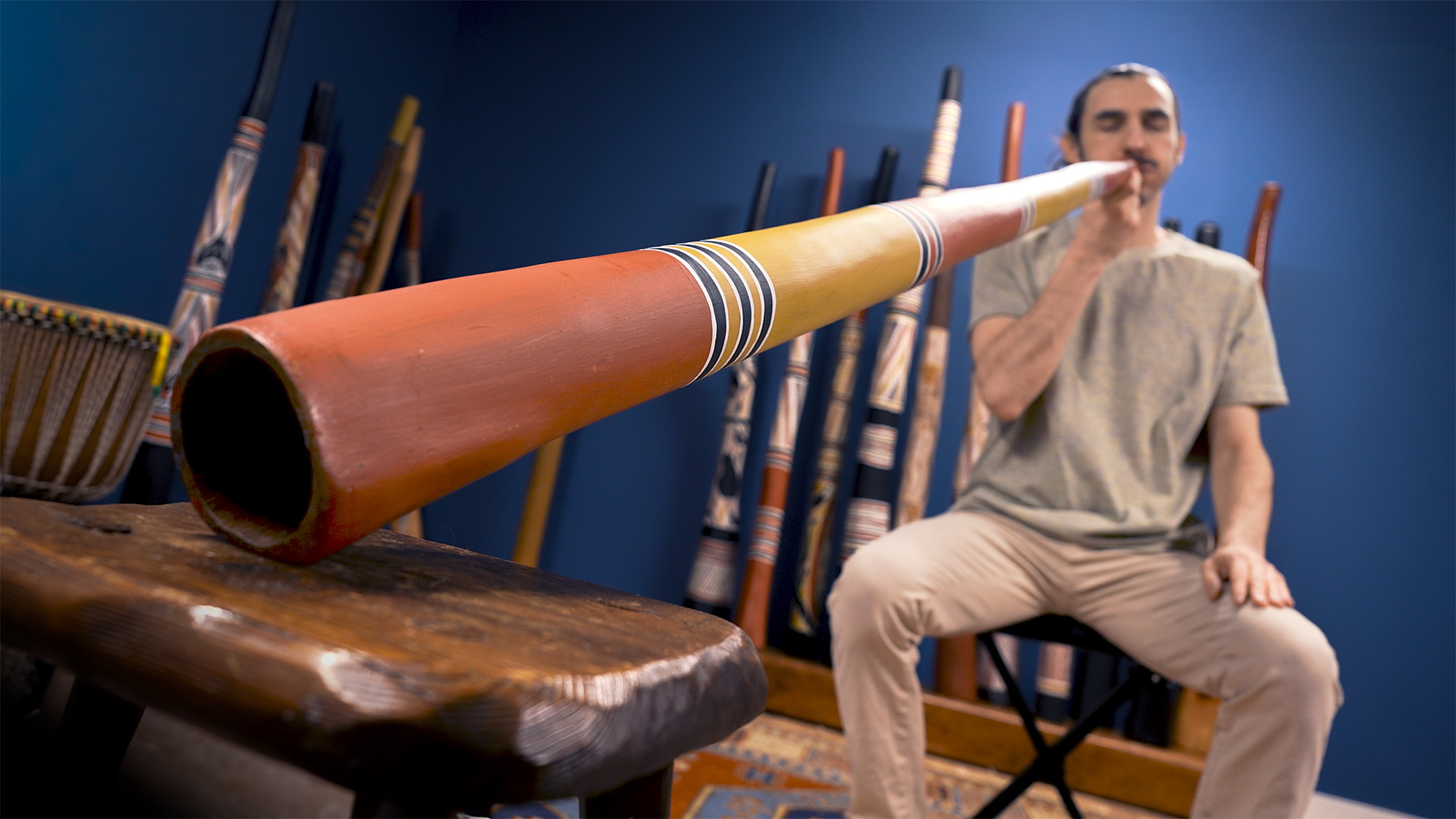
With the arrival of 26 new original termite-hollowed eucalyptus didgeridoos in our shop, I wanted to create something more than a product announcement.
This article takes a deep look at what these instruments actually are — physically, acoustically, and culturally — and why termite-hollowed eucalyptus from Australia holds such a unique place in the didgeridoo world.
The Tree: Why Eucalyptus?
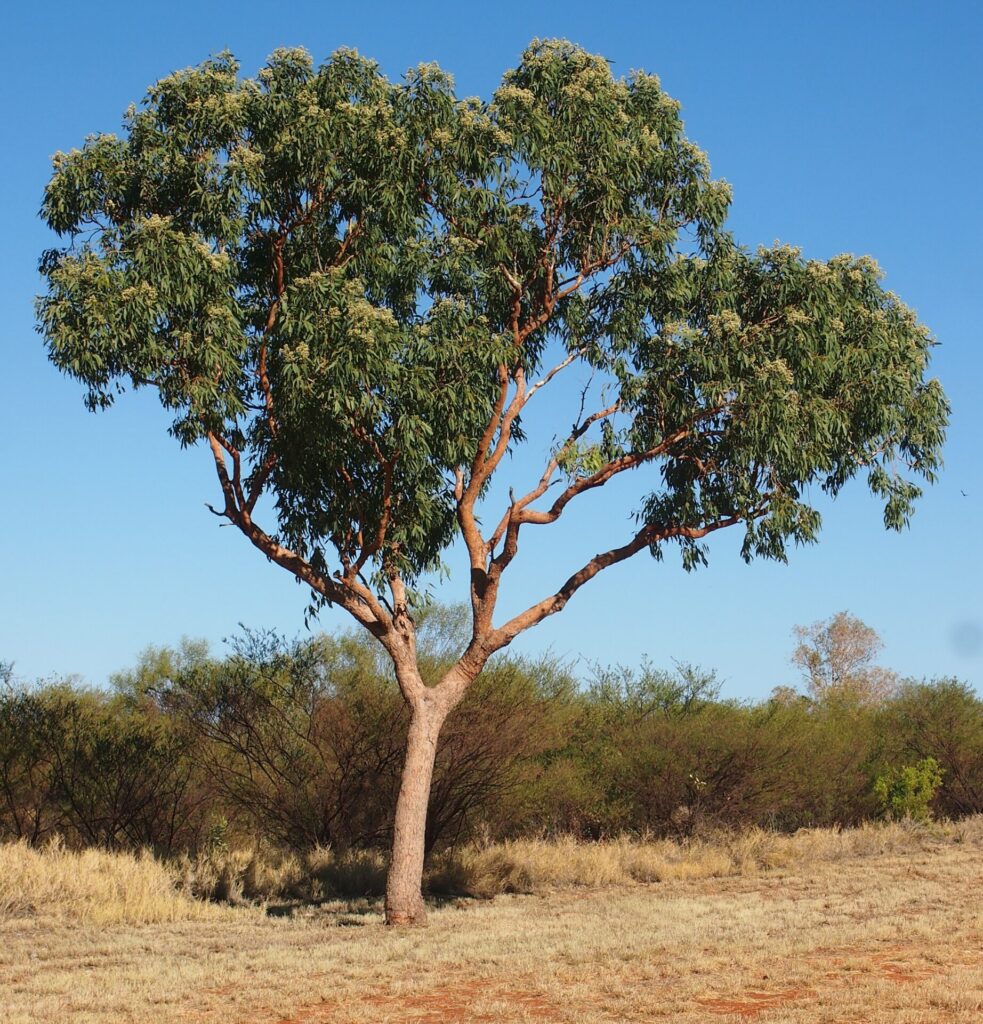
Traditional didgeridoos from Northern Australia are made from native eucalyptus species. Eucalyptus is dense, resonant, and strong. Even though it’s hollowed out, a eucalyptus didgeridoo is still heavier than almost any other didgeridoo material commonly used today.
Different species of eucalyptus produce different tonal characteristics. Density affects sustain and overtone presence. Wall thickness affects projection and low-end response. The plant’s growth patterns influence the internal taper of the wood.
Unlike plantation timber or hardware store lumber, wild eucalyptus develops irregular grain patterns, knots, bends, and density shifts. These natural variations directly influence sound.
When you play a termite-hollowed eucalyptus instrument, you are playing something shaped by decades of environmental growth.
The Termites: Nature as the Bore Maker
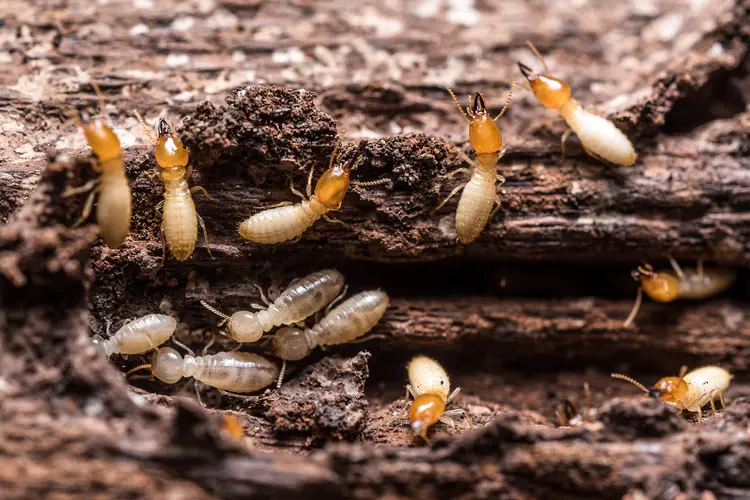
The defining feature of these instruments is that they are naturally hollowed by termites.
Termites consume the softer inner heartwood of a living tree while leaving the harder outer shell largely intact. Over years — sometimes decades — this creates a hollow column inside the trunk or branch.
This process produces:
• Organic internal chambers
• Natural tapers that are rarely perfectly straight
• Irregular texturing inside the bore
• Variations in diameter throughout the length
In comparison, machine-bored modern didgeridoos typically have consistent internal diameters unless intentionally shaped. Termite-hollowed instruments develop complex airflow paths that affect turbulence, back pressure, and harmonic response. This is one of the primary factors that leads these instruments to often feel more dynamic and less predictable.
How Aboriginal Makers Select and Prepare the Tree
The process begins in the bush. If a tree has fallen it may make a good didgeridoo, but most makers walk the land and tap trees to listen for hollowness. A trained ear can distinguish between partially eaten timber and a fully formed, structurally sound hollowed out tree.
Once a suitable tree is identified:
• It is cut to length, usually with an axe or chainsaw.
• Bark is removed
• The interior is cleared of termite debris
• The ends are shaped and refined
• The mouthpiece is either carved directly into the wood, should the dimensions allow, or a beeswax mouthpiece is applied to make an ideally-shaped mouthpiece, usually from 1 to 1.5 inches of inner diameter length.
The external surface may remain natural or be carved, sanded, and prepared for painting.
This video shows the entire didgeridoo making process:
Internal Bore Geometry and Sound Physics
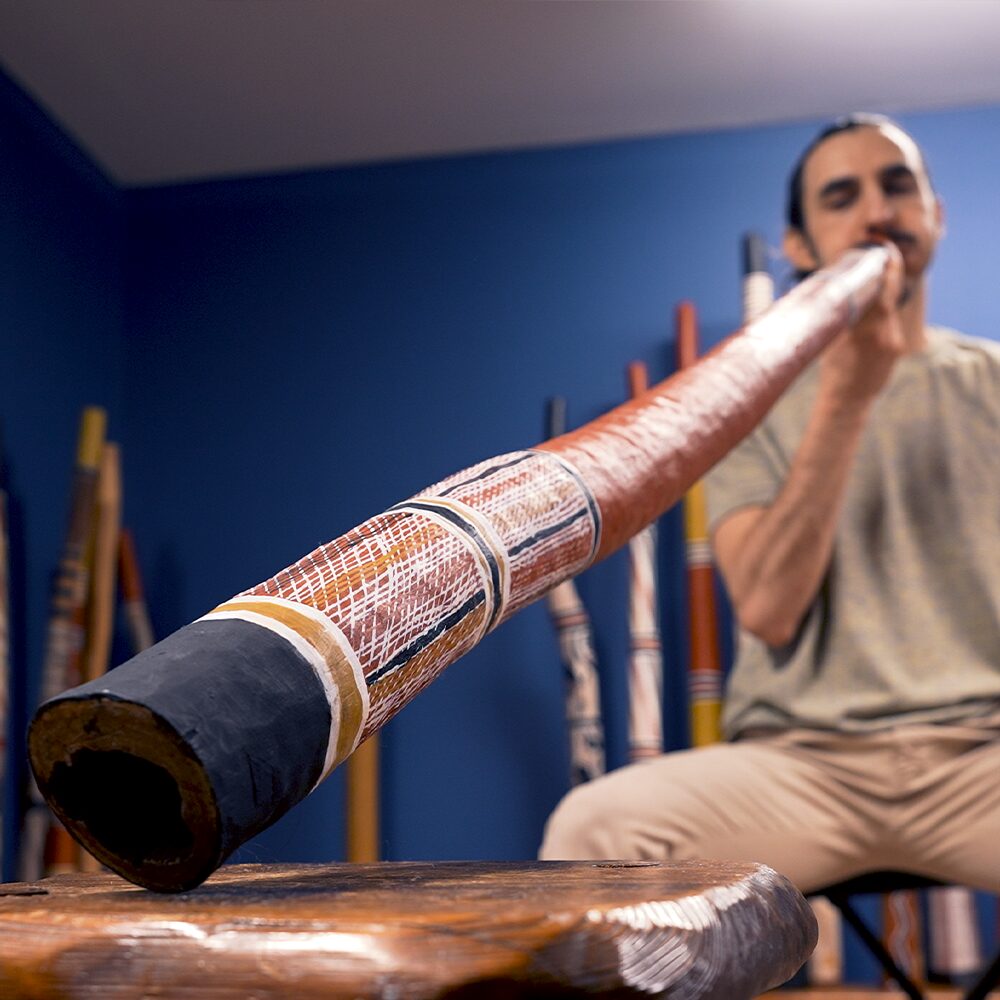
The sound of the didgeridoo is generated by the lips of the player buzzing, creating a vibration which then moves through the column of air inside the instrument. The internal shape determines how that air column behaves.
In termite-hollowed eucalyptus instruments:
• Tapers are often gradual but uneven
• Internal walls may contain ridges or texture
• Diameter shifts create pressure zones
These factors influence:
Back Pressure – The resistance you feel when blowing. Natural bores often have “alive” pressure that supports vocalization and rhythm changes.
Overtone Structure – Subtle diameter changes encourage shifting harmonic layers when adjusting jaw and tongue position.
Vocalizations & Animal Sounds – The irregular bore can enhance the volume of the voice, including traditional growls, barks, and high-pressure bursts characteristic of traditional didgeridoo playing.
Thick eucalyptus walls often produce stronger projection for a louder sound (as an aside, higher pitched drones (typically shorter didgeridoos) also tend toward a louder sound). Two instruments in the same key can feel completely different because of internal geometry.
Cultural Context: Northern Australia and Yidaki
The didgeridoo is most strongly associated with Aboriginal cultures of Northern Australia, particularly regions such as Arnhem Land. In Yolŋu culture and nearby communities, the instrument is often called yidaki. You will hear this name more often than didgeridoo if you spend time with aboriginal people from Arnhemland. It plays a ceremonial role accompanying song (manikay), dance, and storytelling traditions connected to ancestral law and Country. Another variation of the instrument is called a Mago and there are many other aboriginal names as well.
The Paintings: More Than Decoration

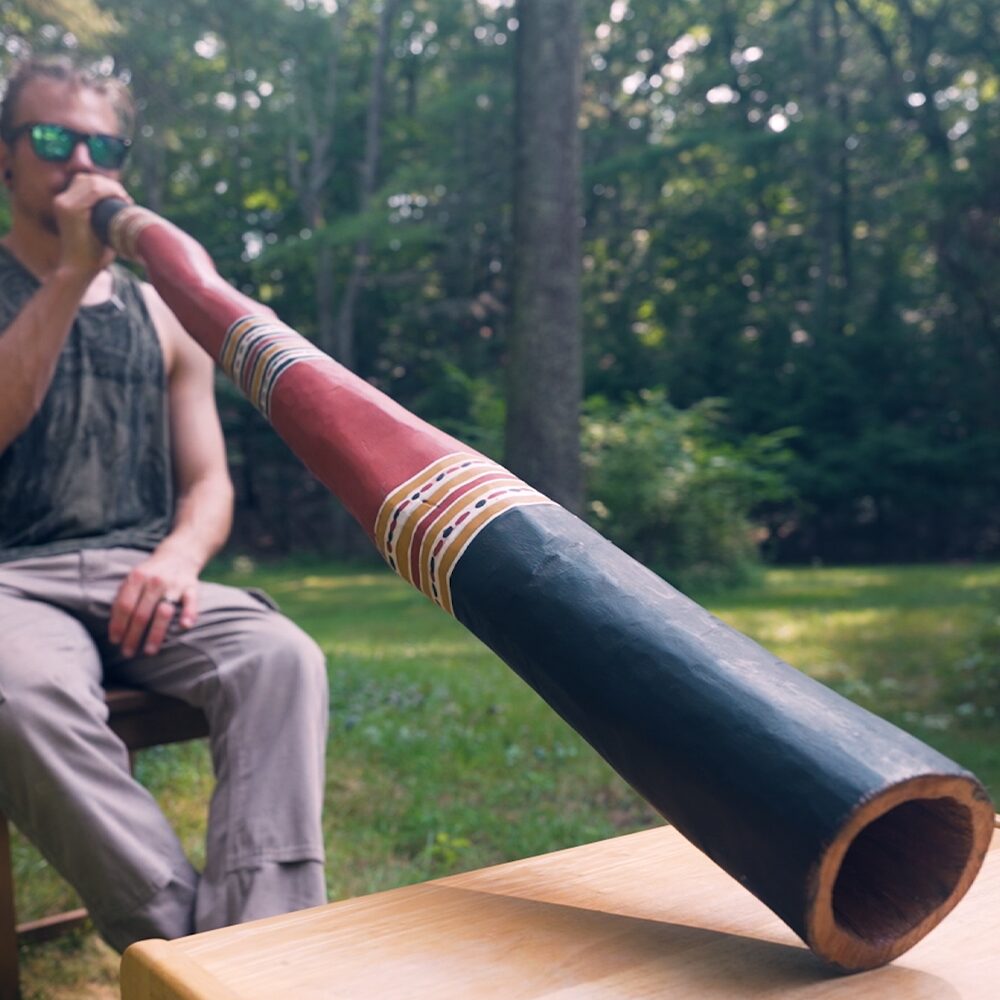
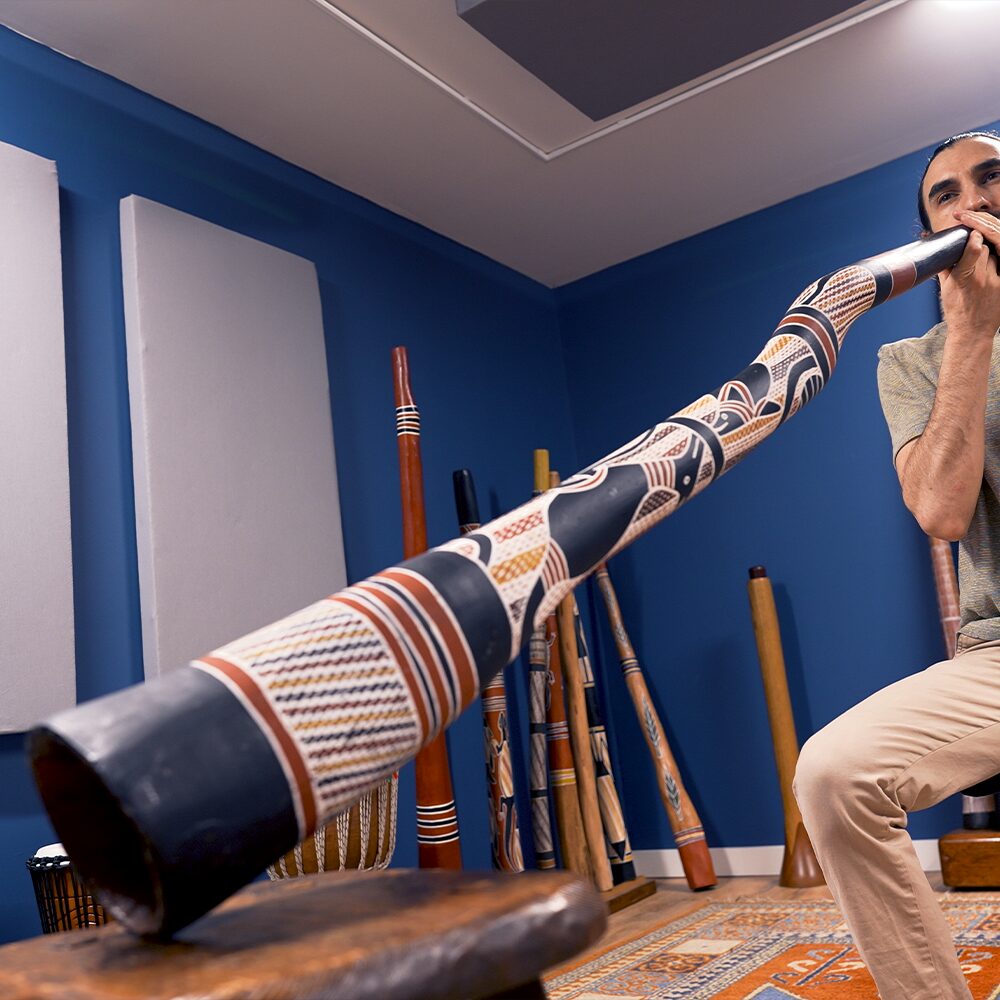
The artwork on authentic Aboriginal-painted didgeridoos is not random ornamentation.
Depending on the region and artist, paintings may represent:
• Dreaming narratives (ancestral creation stories)
• Totemic animals linked to clan identity or individual power animals
• Songlines mapping journeys across land
• Waterholes and meeting places
• Elements like rain, wind, fire, and seasonal cycles
Common visual elements include:
Circles – Often waterholes or campsites
U-shapes – People sitting
Tracks – Animal or human movement
Cross-hatching (rarrk in some regions) – Clan-specific identity patterns
It’s essential to recognize that symbolism is not universal. Meanings vary by language group and community. Some designs are owned by specific clans and are not meant to be reproduced without authority.
Mass-produced tourist instruments often replicate Aboriginal styles without cultural connection. That is very different from instruments painted within Aboriginal artistic lineage. Many instruments are made and painted in countries outside of Australia that imitate the Aboriginal art but in reality do not have a foundation on the meaning behind that art.
Sustainability and Ethical Considerations
Lewis Burns, aboriginal artist from the Wiradjuri nation, explains that for the mallee eucalyptus that grows in his lands, multiple stems grow from the same roots, so if you are considerate in only taking a portion of what is growing from one organism, then you are merely pruning the plant, you do not destroy any life.
That being said, other types of eucalyptus in Australia do not have the same feature. Most aboriginal makers identify individual trees that are already hollowed rather than clear-cutting forests, and they try not to take too many stalks from the same close proximity.
What Players Notice Immediately
If you’ve primarily played PVC or lathe-bored timber instruments, here’s what stands out about eucalyptus didgeridoos that might be a step up for you as a player:
The airflow feels organic
The back pressure breathes
Overtones shift with subtle embouchure changes
The low end often feels grounded and earthy
Each instrument demands slightly different technique
Eucalyptus didgeridoos hollowed out by termites are not standardized products – each one is a unique shape that requires the player to adapt the playing technique to that individual instrument.
Watch demos of 26 termite-hollowed aboriginal didgeridoos in this video:
Should you Go Termite-Hollowed?
Termite-hollowed Aboriginal eucalyptus didgeridoos sit at a rare intersection of nature, acoustics, and culture. The tree grows for decades. Termites slowly shape the internal bore. A maker walks the land, listens, selects, cuts, cleans, shapes, and seals. An artist adds story through paint. Then a player brings breath into the column and the instrument finally becomes what it was always becoming.
The sound you hear isn’t just air moving through wood. It’s air moving through something shaped by climate, insects, density shifts, irregular grain, and generations of knowledge. The subtle taper, the textured interior, the beeswax seal, the painted surface — every element plays a role in how the instrument responds.
Understanding termite-hollowed eucalyptus didgeridoos means understanding that they are not interchangeable objects. They are individual acoustic systems with cultural roots and natural variation built into them. That variation is not a flaw — it’s the defining characteristic.
When you look at one, you’re seeing land history. When you play one, you’re interacting with physics shaped by ecology. And when you learn about the paintings and their origins, you begin to see that the instrument has layers far beyond the drone. This is what sets termite-hollowed eucalyptus didgeridoos into their own category and makes them among the most prized didgeridoos around.
See what aboriginal didgeridoos are in stock at Didge Project:
-
Sale!

Aboriginal-Made Eucalyptus Didgeridoos & Other Hardwood Didgeridoos
Price range: $250.00 through $2,297.00 Select options This product has multiple variants. The options may be chosen on the product page